Starlink Internet Review 2025: High-Speed Satellite Internet for Remote Areas
In 2025, satellite internet technology has taken a massive leap forward, and one name stands out in this space: Starlink. Developed by SpaceX, Starlink promises to deliver high-speed, low-latency internet to remote and underserved areas worldwide. After several years of development, deployment, and expansion, how does Starlink fare in 2025? Is it truly the solution for people living far from traditional broadband infrastructure? This review explores Starlink’s current capabilities, performance, affordability, and overall user experience.

In 2025, satellite internet technology has taken a massive leap forward, and one name stands out in this space: Starlink. Developed by SpaceX, Starlink promises to deliver high-speed, low-latency internet to remote and underserved areas worldwide. After several years of development, deployment, and expansion, how does Starlink fare in 2025? Is it truly the solution for people living far from traditional broadband infrastructure? This review explores Starlink’s current capabilities, performance, affordability, and overall user experience.
What is Starlink?
Starlink is a satellite internet constellation operated by SpaceX. Unlike traditional satellite internet services that rely on a few geostationary satellites positioned about 35,000 km above the Earth, Starlink uses a large network of low Earth orbit (LEO) satellites orbiting roughly 550 km above the surface. This closer proximity allows for reduced latency and faster speeds, bridging the gap between satellite and terrestrial internet performance.
As of 2025, Starlink boasts over 5,000 active satellites and plans to deploy tens of thousands more to cover even the most isolated regions on the planet.
Installation and Equipment
One of Starlink’s strengths lies in its easy-to-install user equipment. The Starlink kit comes with a compact satellite dish (also called “Dishy McFlatface”), a Wi-Fi router, and power adapters. Setting it up is a straightforward process: point the dish toward the sky, connect the router, and run the Starlink app to activate the service.
For 2025, SpaceX has improved the hardware with a sleeker, more weather-resistant dish and a router with better Wi-Fi 6 capabilities. The dish now adjusts automatically to optimize satellite connection without manual intervention, making it highly user-friendly even in extreme weather conditions.
Smart Mini Power Bank (20000mAh)
iPhone Update 2025: Hidden Features, Problems, and Fixes at a Glance!
Earn 30,000 Taka Per Month with ChatGPT – 5 Secret Methods No One Talks About!
Speed and Performance
Speed is a crucial factor when choosing an internet provider, especially for remote areas where options are limited. In 2025, Starlink offers download speeds typically ranging from 150 Mbps to 300 Mbps, with some users reporting bursts of up to 400 Mbps in ideal conditions. Upload speeds have also improved, generally hovering between 20 Mbps and 50 Mbps.
Latency, often a downside for satellite internet, is now consistently in the 20-40 millisecond range, comparable to many terrestrial broadband connections. This low latency makes Starlink suitable for activities like online gaming, video conferencing, and streaming high-definition content without noticeable lag.
The network handles multiple users well, which is important for households and small businesses. However, in extremely congested areas or during peak usage times, some speed fluctuations may occur.
Coverage and Availability
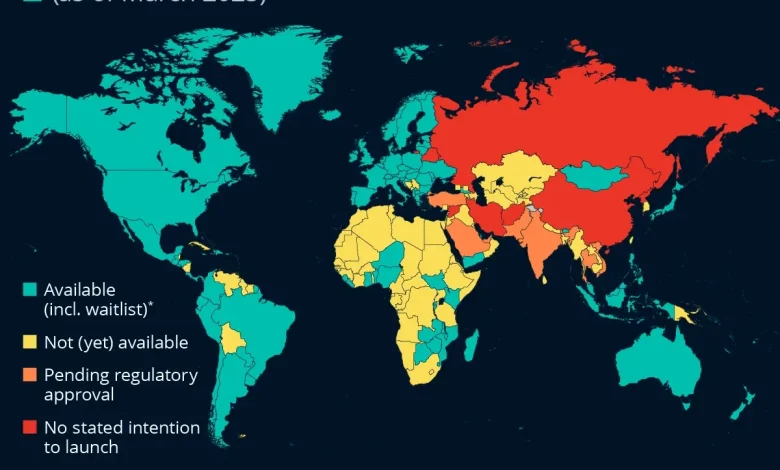
Starlink’s most significant selling point is its global reach. In 2025, the constellation covers nearly every continent, including rural parts of North America, Europe, Africa, Asia, and even remote islands. This extensive coverage means that people in previously internet-deprived regions can now access reliable high-speed connections.
The service is especially transformative for industries like agriculture, mining, and maritime operations where traditional internet infrastructure is impractical or nonexistent.
Pricing and Plans
Starlink’s pricing remains competitive for satellite internet. The basic residential plan costs around $110 per month in the U.S., which includes unlimited data with no throttling or caps. Equipment costs have slightly decreased due to hardware improvements, with the initial dish and router setup priced around $450.
For those needing faster or more reliable connections, Starlink offers premium plans with prioritized bandwidth and higher speeds, costing approximately $250 per month. Business and enterprise solutions are also available, with tailored service agreements and dedicated support.
Compared to other satellite providers, Starlink’s pricing reflects the value of higher speeds and broader coverage, although it’s still more expensive than many urban fiber or cable internet options.
Pros and Cons of Starlink in 2025

Pros:
Wide Coverage: Access in remote, rural, and underserved regions.
High Speeds: Competitive download and upload speeds for satellite.
Low Latency: Suitable for gaming, streaming, and real-time communications.
Easy Setup: User-friendly hardware and installation process.
Unlimited Data: No data caps or throttling on most plans.
Continuous Improvements: Regular updates to software and hardware.
Cons:
Weather Sensitivity: Heavy rain, snow, or dense foliage can affect signal quality.
Initial Equipment Cost: Upfront dish and router cost might be high for some users.
Speed Variability: Speeds may fluctuate during peak usage or satellite handoffs.
Limited Urban Use: In densely populated cities, Starlink might face regulatory or interference challenges.
Real-World User Experience
Users in remote regions often praise Starlink for finally providing them with broadband-level internet where none existed before. Farmers, remote workers, and educators highlight how the service has transformed their productivity and access to information.
However, some users in areas with extreme weather or heavy tree cover report occasional outages or slower speeds. Despite this, the overall consensus remains positive, with many appreciating the independence from traditional ISPs and the continuous improvement in service quality.
The Future of Starlink
SpaceX plans to continue expanding its satellite network, aiming for over 40,000 satellites to increase capacity and reduce congestion. Innovations like Starlink V2 dishes with enhanced antennas and laser inter-satellite links will further improve speed, latency, and reliability.
Moreover, SpaceX is exploring integration with mobile networks and in-flight internet services, broadening Starlink’s applications beyond static home use.

Conclusion
In 2025, Starlink stands out as a revolutionary option for high-speed internet in remote and underserved areas. While it may not replace fiber or cable in urban centers anytime soon, its unique satellite constellation offers reliable, fast, and relatively affordable internet access to those who need it most.
For anyone living far from traditional broadband infrastructure or seeking a backup internet connection, Starlink is a compelling choice. With ongoing improvements and expanding coverage, Starlink is reshaping how the world stays connected, one satellite at a time.